
Showing posts with label Social Networking. Show all posts

Google+: Consolidation and Integration


So I may have been too focused on a single feature of Google+ in my previous piece, so I’ll continue where I left off. Rather than discussing a feature such as Hangouts, Sparks, and the like in detail, I’m going to focus on the big picture.The big picture is that G+ is severely lacking in user content. The utility of a social network from the user’s perspective is content. Users want to what they’re friends are doing or saying. Think of the badness of MySpace: tons of vacuous celebrity or upcoming film profiles with members but of little actual substances besides gaudy HTML templates and fake spammer accounts.

Based on current trends (again, barely researched and based more on intuition and surface impressions than anything), I don’t see Google+ becoming a viable direct competitor to the “trinity” of social networks it is supposedly replacing- Facebook, Twitter, and LinkedIn. My first reason is that users possess finite time, effort, and patience for social networks. On this point I defer to one infinitely more knowledgeable on this matter than me. The CEO of LinkedIn, Jeff Weiner, has summed up the dilemma: “All of a sudden, you say ‘Where am I going to spend that next minute or hour of my discretionary time?’ and at some point, you don’t have any more time to make choices.”

And it’s true. The existing social network ecosystem has different networks for different niches. FB for general casual social, LI for professional, Twitter for microblogging (or micro-Tumblring, which would be equal to picoblogging I guess), and never the thrain shall meet. Users do not possess the time to go on redundant networks- who bothers with having both Facebook and MySpace at the same time?

For Google+ to survive, it will have to carve out its own niche, or overthrow any existing social networks. To do so, it will need to offer unique content that will attract users and compel them to create new content. It quickly becomes a chicken and egg issue.

The second reason for the lack of user content is that G+ does not seem to offer many new features. New features allow users to generate new content. But the current offerings seem to be rebrandings of features found in different social networks, and on Google itself. The front page is simply the same as the Facebook newsfeed, LinkedIn updates, etc. Posting updates, sharing items, and so on is the same sort of experience we see in other social networks. The originally-touted killer app was privacy- at this point, Facebook has already covered that, by introducing the option to restrict who gets to see what update.

Despite any shortcomings in these features, Google+ can attract new users in other ways. First, is the weight of the Google brand and the very dream of a “better Facebook” itself. Doubtless many of the users who joined are people interested in checking out something that aspires to be the next social network, created by the titans of Google. Amazingly, the hoary “this is a Beta, invites only!” policy still propels viral transmission despite having been used again and again by Google.

Next, Google+ taps into all of Google’s other features by giving an improved dashboard and integration with other Google options. The company’s m.o. is to get its hands in as many pies as possible, creating a Google X for every thinkable service. (Though, unfortunately, not yet an ISP.) Google+ seems to not simply a social network, but a revamp of Google Profiles. Previously, Profiles were hardly a widely used feature, or a feature that lacked many uses. You create an online Googlecentric identity tied to your Gmail account and others that people can find, and that seemed to be pretty much the extent of it. With G+, your Google identity is actually useful for the other features of social networking besides discovery- you can connect with people, broadcast public statuses and posts to them, Hangouts, etc. By having a singular, defined identity, you can have all of your Google accounts consolidated to one location. Perhaps that is the reason why the system is named Google Plus, rather than Google Circles or Google Social or Google Faces or Orkut+. G+’s aim is not only be your social network, but a better way to access your Google everything’s. Ideally, this would improve your Google experience, encouraging you to spend more time on Google+, generate more user content, which would lead to more pageviews so the ad gods are happy and Google makes money.

But the first way does not guarantee user content- how many of these new G+ accounts translate to accounts that are actually used on a regular basis? And the second way may actually be a liability. Consolidation can lead to alienation. Consider the whole snafu with the real name policy. Even before that, mandating that Google Profiles are to be made public or deleted. This is Google micromanaging user behavior in order to drive consolidation of accounts. If you’re going to tie your Google Profile to a social network, we can’t have fake bot accounts now can we? Why not make it easier to track your Google content by attaching your real name to them? But despite these good intentions, this sort of policy only angers the public. Think random FB site redesigns, except worse because you’re dealing with privacy issues here.

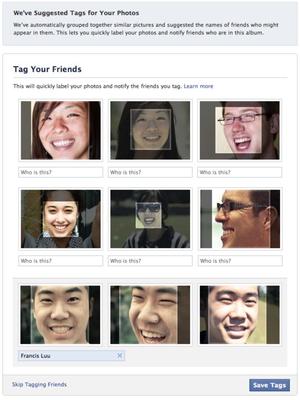
That said, I do enjoy the integration with other Google products, particularly G+’s albums being powered by Picasa. One-click red eye correction beats slightly Orwellian automatic friend tagging any day of the week, and I’m surprised that Facebook hasn’t caught up yet with some limited photo editing functionality.

Possible futures for Google+

Despite my first reason, ironically, I do foresee G+ and FB coexisting despite users having limited time and effort. That’s because far from transforming into the “next Facebook”, I see G+ staying on as a niche network. Google+ will survive in the clanking Google juggernaut by becoming the “group Skype network,” the “Picasa network”, and perhaps as the “nerd network.” The former is because Hangouts and Picasa are superb, and G+ is a good enough frontend to access and manage those accounts as any. The latter is one of my gut impressions. Some of the most popular G+ posts were Tom Anderson’sthoughtful ruminations on how it fulfills some of his dreams for MySpace. This may be due to my own limited view, but I don’t see any public posts from entertainment celebrities on G+ yet.

Of course, maybe it’s just because the early adopters of G+, an actual viable alternative to FB, a Pallas Athena springing from the forehead of Page-Zeus himself, are nerds and savvy social network power users. Tom Anderson showing up and getting a lot of buzz is a natural consequence, as opposed to Kim K. or Kanye. I’m not sure who were the first big celebrities on Twitter, but I doubt it was Ashton Kutcher. Unless there is a mass exodus from Facebook, the biggest stars on G+ with publicly read and re-posted notes are likely to be the geek glitterati, the industry insiders, the web essayists.

My view is that most people will continue to use traditional, preexisting networks. G+ will survive, not only in the nerd/tech niche, but also through apps that allow for easy reposting on multiple networks. Think of the utility of Meebo, which allows you to be on multiple chat accounts of multiple protocols in one easy web app. Think eventually of a meta-poster that allows you to Share a story on Facebook, Twitter, LinkedIn, Google+ at the same time. Or Like, +1, InShare, Tweet, Digg, Reddit simultaneously. (Gone are the days where there’s a mosaic of share buttons on the bottom of every article!) Ultimately, the real killer app for social networking is to simply bridge all of your current networks together. The upcoming G+ API is only the beginning.

And that would be true consolidation, not simply a Google Profiles+.

Source: APOCRYPHON

Does the Impressive Growth Rate of Google+ Make it a Competitor Against Facebook and Twitter?


By now, you’ve probably heard of Google+, the new social network created by Google that has taken the internet world by storm. What you may not know is that the platform is already considered the fastest growing of its kind. It took both Facebook and Twitter well over two years to reach the milestone of 10 million users. Google was able to do it in just over two weeks.

The platform is growing at a tremendous rate, but does that make it a worthy foe to the two biggest players in the social space? While that still remains to be seen, Google+ has some exclusive qualities that give it all the potential to be a serious competitor.
User-Generated Recommendations

A unique Google+ feature that stands out right away is Sparks. What you have here is basically a discovery tool that allows users to find web content directly from the platform. Users can submit topics of their own interests, which in theory, will build up a database of relevant content over time.

For instance, as the system develops, exploring the “Sports” spark may connect the user with content from around the web provided by outlets such as Bleacher Report, ESPN, and Yahoo Sports. Sparks is highly focused on relevant content so there is no need to worry about encountering what a friend is having for dinner, or where they’re hanging out over the weekend.
Video Group Chat

Another element that enables Google+ to standout from the competition is a feature by the name of Hangouts. This particular feature has a lot of people talking as it supports up to 10 people in a single session and best of all, is completely free to use. With the ability it offers to watch YouTbe videos as a group, we see this one being popular with both consumers and business users.

Facebook recently rolled out its own video chat feature, one powered by VoIP software maker Skype. However, this feature only supports one-to-one communications and of course, doesn’t have YouTube video viewing capabilities. Twitter is left out of the comparison with no video chat function to call its own.
Segmented Approach to Friendships

Last but not least we have Circles, the Google+ component that allows users to manage their contacts on the platform. The cool thing about Circles is that it lets you segment your contacts into different groups, which could come in handy when you want to share something only meant to be seen by select eyes. So for example, if you have some important updates you want to share with your employees, you can select “Team”, or whatever you have decided to call that particular circle, from the drop-down menu, which ensures that only those people see the content.

Sounds like a simple concept, but it is one that both Facebook and Twitter have been missing since their inception.
Conclusion

Google wasn’t able to make Facebook or Twitter shed a bead of sweat with its previous social attempts, but the search giant may have finally come upon a fear inspiring weapon this time. And while there is no guarantee that we will see the crowning of a new social king any time soon, Google+ is shaping up to be a firm holder of the number 3 spot at the very least.

Source: Soshable

Google+ causes stir with Suggested User list


Social network tries to help users find interesting people to follow; critics say it's elitist

Google+ is trying to help users expand their Circles by offering them a new Suggested User list. The only problem is that some users are taking exception to what they're calling an elitist system.

Late last week, Google's new social network, Google+ , posted the list in an attempt to help users who want new people to follow but aren't sure how to do that. Increasing followers also would boost the "sticky factor" of the new site and possibly make Google + more popular in the social networking world.

The list includes tech-related people including Mike Elgan, a columnist for Computerworld, and Pete Cashmore, the CEO and founder of Mashable. However, the list also includes celebrities like Paris Hilton and Taylor Swift.

Elisa Camahort Page, co-founder of BlogHer, made the Google+ Suggested User list but says she's not a fan of these lists in a post on Google. "I totally wish Google+ didn't go down the list path," she wrote . "But I will probably mine the list for ideas. And probably, eventually, so will you. And I guess that's why they do it. We succumb. But I can assure you: A suggested user list will never help this tool go mainstream or keep the 'regular people' around."

And while the list is the topic of online chatter, Bradley Horowitz, a product vice president for Google+, took on the jabs that the list is elitist in a post.

"Today's list isn't yet personalized," Horowitz wrote. "At first, personalization will be 'lite' -- users in different regions and languages will get different recommendations. But per above, we intend to allow people to deeply personalize and connect with like-minded people that create great content around almost any topic they care about."

He added that they're goal is to enable Google+ to connect people on a myriad of topics. "There's actually quite a lot of diversity on the initial list, and I expect that very few of us had discovered all of these folks," said Horowitz." "I know I've discovered some great new folks I'd never heard of."

While Google+ now is helping users find people to be interested in, just a few weeks ago, the site added a button that enables users to ignore () people who annoy them.
Source: PCAdvisor

The battle between Google and Facebook


Facebook has recently launched a couple of new services similar to features on Google+. The latest Facebook update includes a new status update box that looks almost the same as the status update box on Google+ where you can add a location to your update and select which of your friend groups can view your update.

For people not familiar with Google+, how “Circles” works is that you can add and categorize people that you are interested in following into circles that you create. When you post something new on Google+, you can select which circles will be able to view your content.

It was really only a matter of time before Facebook implemented a similar feature as this in my opinion is one of Google+’s best features. Will this new update stop you from using Google+ in your digital marketing initiative and are you going to focus more on Facebook?

Copying Google+’s features

While this does provide one of Google+’s main features on a Web 2.0 channel with over 750 million users, I can’t help but feel that Google+ in my opinion is still doing a better job at it. The whole concept of circles on Google+ and the ease of adding new people you are following to dedicated circles feels so much more organic to me than friend groups on Facebook. Google+ makes it super easy to add users to Circle’s, while I’m still trying to find the friend groups feature on Facebook.

So what does this all mean for all the digital marketers out there? Does it mean that we should now forget about Google+ in terms of social media marketing, as Facebook has just duplicated Google+’s best feature? This digital marketer says no. Google+ is still very young with a small following. In my own opinion, they do everything far better than Facebook and it is just waiting to make their big break into the social media battlefield. At this moment, Facebook is still king of social networks and it will take quite allot of effort to beat them. By only copying features on Google+ will not stop the Google+ threat to Facebook.

Source: Anton Koekemoer

5 Best Sites to Get The Most Out of Google+


Google plus (Google+) is a new social platform; it’s been around just a little more than a month, which means users are still figuring it out. Most of its users have adopted it and are satisfied with its operation. Yet, do you know that there are still many things to explore? I have compiled a list of websites which will help you to make the most out of old and new features to make your google plus experience even better than before.

1. Google Plus Social Statistics

Google Plus Statistics currently tracks and generates detailed statistics for 51,046 users and pulls in hundreds of the most popular posts, every second of the day, from Google plus.


Add yourself so they can start tracking your personal Google+ statistics too. You will be able to see how many people added you to their circles, how you grow over time and where you rank in the list of popular Google+ users.
2. Plus Buddy


Plus buddy analyzes your public Facebook profile and provides recommmendations of who to follow on G+
CircleCount counts the followers and friends on Google+ .


The audited accounts have recently appeared on Google +. CircleCount proposes a directory of these accounts. Ability to classify them in a mosaic on a Google Map to insert a button on your blog, etc.
4. Find People on Plus

Find More People on is a kind directory comprising all Google plus users. The site allows you to sort contacts by categories (country, education, occupation, etc.)


Meet individuals like Mark Zuckerberg in United States with 439,589 followers. Or connect with Larry Page on Google Plus with 256,765 followers.
5. The Unofficial Google+ Wiki


This site is simply a wiki (collaborative website) and to discover all the features of Google plus. Can be the basis for new arrivals.

Source: Tricksmachine

Posts on Google+ look very familiar


Last month, like millions of other people, I joined Google+, the new social network started by the search engine giant.

Driven by your Google profile, the network requires members to use their real names and connect to friends, family, acquaintances and experts via a system of "circles," the building blocks of Google+ relationships.

You also can use video chats, which Google calls "hangouts," to communicate with people in your circles.

Caught up in all the buzz, I created my account fairly soon after the site was launched in late June.

And now, more than six weeks later, I'm still not sure of the benefits of joining Google+.

It could be that perhaps I'm not following enough of the right people, but my Google+ news feed is looking pretty lonely. I often see posts from friends duplicating information they've posted on Facebook or Twitter. And there are even comments lamenting how there's not much going on. "This place is getting kinda sad," one friend wrote on Google+ this week.

With several other social networks fulfilling distinct functions in my life, I still haven't figured out how Google+, with its 20-million-and-growing members, can work best for me.

I use Facebook primarily to stay in touch with family and friends. Because my audience is largely limited to less than 250 close acquaintances, the links and comments I post tend to be more personal and more lighthearted. Because of Facebook's vast reach (it has 750 million members), it's an effortless way to stay connected.

On Twitter, I follow over 1,000 people. To keep on top of the up-to-thesecond torrent of tweets, I've divided those by category: news, digital experts, journalists, celebrities, comedians, food writers and lastly, friends. The order of my lists reflects how I use the social network.

Twitter is primarily a way for me to stay abreast of conversations that are happening with people I don't know but I know of. I don't tweet that often but I spend a lot of time reading updates.

Then there's LinkedIn. I use the fastgrowing business network, which has 120 million members, to connect with other professionals. I won't friend people I don't know, unless they can explain how we're connected. I check the site about once a month and usually only if I want to respond to an invitation or a message.

I also have a Foursquare account that I never use. And I've joined diaspora*, a network created by New York University students as an open-source alternative to Facebook. That site is still in its alpha phase and I only have two friends, both of whom I invited to join.

Google+ can't merely position itself as the next Facebook. It needs to offer something that Facebook doesn't. Right now, one of the biggest ways it's trying to set itself apart is with its advanced privacy controls, an area that Facebook is struggling to compete in. But privacy concerns, as Facebook's strength shows, are not enough of an incentive to drive new users.

With all of these social networks, I'm surprised to find how much time I spend managing my posts to keep them distinct on each platform.


People often use Facebook to repost content they've already created on Twitter and right now, Google+ just seems to be another place to repeat the same thing. How much original and distinct content can one person generate daily?

My questions about how to use Google+ remind me of when I first joined Twitter almost four years ago. I signed up too late to get "asmaa" as a username, but not too late to get "asmaam." But soon after I joined and started following my friends, I was stymied. I didn't really understand how people were using Twitter and consequently, didn't log in again for almost a year. I only came back after the network became more popular and attracted a broader group of users.

For me, it was much easier to see the benefits of Twitter when it was in full swing. For now, I think I'll hang back and see how Google+ pans out. In the meantime, it hasn't stopped me from looking for renewed purpose in other social networking sites.

Two weeks ago, I signed up for something called Heello, which was started by the founder of Twitpic. The network, touted by some as the next Twitter, operates on a system of "pings," which it calls "short text updates with optional photos and videos." Sounds familiar. It already has 2 million users, but I have no idea what I'm going to do there. I just joined because it was so new, the username "asmaa" was still available.

Source: Montrealgazette

Now, Google+ issues verification badges


Indian social media marketing companies believe this is a step in the right direction, since it helps get rid of fake identities.

If you're a celebrity, a public figure, or have a wide circle of friends on Google's social networking site, Google+ (Plus), being anonymous or using a pseudonym is no longer an option. A few days ago, Google+ started rolling out verification badges on profiles, "so you can be sure the person you're adding to a circle is who he claims to be".

"Not sure whether Dolly Parton is actually a particular Dolly Parton? For now, we're focused on verifying public figures, celebrities, and people who have been added to a large number of circles, but we're working on expanding this to more folks," says Google employee Wen-Ai Yu on the official Google blog post. When you visit the profile of a celebrity or a public figure, you would spot a verification badge next to their profile names. This would help you easily determine which profiles are owned by real and verified people. "You might be wondering how to verify your own name on Google+. Keep in mind this is just the beginning. We're working on expanding this to include more people in the future, so hang tight," adds Yu.

Incidentally, Facebook, too, has a verification process, but it is only for the enterprise/brand that uses its platform. However, individuals typically sign-in on Facebook with their real names. Twitter, too, verifies accounts of celebrities or those who have large followings. However, Twitter's public beta version of account verification is no longer available.

Indian social media marketing companies believe this is a step in the right direction, since it helps get rid of fake identities. "It is an extremely important aspect for any social networking platform, as it is difficult to know the authenticity of a user. In case of celebrities, we have seen how fake accounts can create challenges. Nobel prize-winning economist Amartya Sen's identity was impersonated by an imposter on a popular social networking site. Brands, too, have a tough time. This makes sense for common users as well. If Google manages to take this excercise on a larger scale, it would be a differentiator in the market. It has been struggling to increase the number of users on Google+," says Hareesh Tibrewala, joint chief executive, Social Wavelength.

One of the biggest problems in any online system today is that of fake identities. "This would make sure people on Google+ are genuine and would try and stop fake accounts," says Rajiv Dingra, founder, WatConsult. Moksh Juneja, founder, Avignyata, thinks says, "I think on a social networking platform, the verification process is good for celebrities, brands and firms like ours. In case of Google+, the verification process makes sense, as it also plans to launch business solutions."

However, the move by Google+ to seek real names has once again raised the question of how social networking sites can strike a fine balance between holding users accountable for what they post (write or tweet), and the need for anonymity for political activists and whistle-blowers, especially in countries where the internet is closely monitored. Recently, Facebook marketing director and Mark Zuckerberg's sister, Randi Zuckerberg, said anonymity had no place on the internet. The Electronic Frontier Foundation countered, saying, "The problem with the civility argument is that it doesn't tell the whole story."

"Not only are uncivil discourses alive and well in venues with real name policies (such as Facebook), the argument willfully ignores many voices that are silenced in the name of shutting up trolls: Activists living under authoritarian regimes, whistle-blowers, victims of violence, abuse, and harassment, and anyone with an unpopular or dissenting point of view who can legitimately expect to be imprisoned, beaten-up, or harassed for speaking out," the Electronic Frontier Foundation blog says. This, even as it acknowledges the fact that as a private company, "Facebook is free to set its own policies," but simultaneously exhorts users "...an internet in which everyone has to use their real name is not necessarily going to be any more polite, but is guaranteed to be a disaster for freedom of expression. Let's not go there."

In June, Facebook, too, was reproached by privacy advocates and regulators across the globe who decried the global roll-out of Facebook's facial recognition software. The feature, enabled by default, allows Facebook to recognise individual faces within pictures. The company can then recommend its users to 'tag' the individual in the photo.

The debate assumes significance, since social networking sites are very popular. They account for over one billion global users, of which over 75 million are in India alone. Facebook has around 33 million users and Orkut (also a Google property) has around 18 million users. Google Plus is also gathering steam, primarily with help from users in India and the US. Within weeks of its launch, the site saw nearly 20 million users sign up. Globally, though, Google+ numbers pale in comparison with Facebook's over-750 million users or even micro-blogging site Twitter's over-200 million registered accounts.

Source: AFAQS!

Why Google+ ?


One of the most common things I see when a friend or family member joins Google+ is a simple post asking ‘Now What?’ Assuming they even had enough interest to try Google+. Many are comfortable on Facebook and see no reason to change. (I remember similar sentiments with mySpace & Facebook early on.) I personally still use both Twitter and Facebook, just to a lesser degree since joining Google+. This post is simply going to highlight some of the reasons I dig Google+ so much. In addition towards the end I will list a few of Google+’s ugly spots.

Following vs Friending (Circles?)
With Google+ you do not send friend requests. Instead you find someone you know or someone your interested in (a poet, a photographer, a journalist, a technologist, anyone) and follow them by adding them to a circle (similar to following someone on Twitter.) Circles allow you to organize who you follow. You might simply create a single circle and throw everyone in there or you might end up with a circle for friends, for family, for musicians, for photographers, etc… Personally I have fifteen circles ranging from close friends to unknown photographers. Members of these circles do not know where I have assigned them, only that I am following them. I enjoy this level of customization and like that it is a core component of Google+ used throughout the system for enhanced sharing options.

Sharing Content
By now almost everyone is familiar with the status update. Whether your doing 140 characters on Twitter or 420 characters on Facebook. I love that in Google+ your not limited to a set number of characters. In addition Google gives you formatting options: http://mashable.com/2011/07/12/the-google-cheat-sheet-pic/

This makes sharing on Google+ almost like a mini-blog. You can share as much or as little as you like. Further (expanding on the Circles concept mentioned above,) you have full control over who sees what you share. You can post publicly, to a specific individual, to extended circles (everyone in your circles as well as everyone in their circles,) or to a specific circle (family for example.) Here is a nice post that covers this in more detail: https://plus.google.com/103438332263642514693/posts/HQ24XFuVFx1 the image at the bottom of the post is especially helpful.

Sharing Photos
Similar to any other content you share on Google+ you define exactly which circles (or specific individuals) can see what photos. The interface is incredible and creates a much better browsing experience than Facebook’s photo interface.

Profile
I really like the simplicity and layout of profiles. There is plenty of room to get as detailed or as brief as you want. Further you can limit each of the profile sections to specific circles or individuals just like any other content you share on Google+.

Games
Many were afraid of the imminent arrival of games on Google+ but so far I would say they have been an incredible success. I love that I have not been spammed by endless automated messages from people I follow. No farmville requests here. I have seen exactly one message in my main stream about Angry Birds and it was not automated. Beyond the avoidance of spam, the games are actually fun. I have no doubt that Facebook games are fun as well, but because of the intense amount of spam, I stopped playing them.

Superficial reason I enjoy Google+
I really like the look of Google+ better than Facebook. I am tired of the blue. Google+ looks cleaner. Maybe this is nothing more than an artifact of Google+ being newer. Either way Facebook is likely due for a face lift (although they need to be careful at the same time – the last thing they want to do is give people a reason to try Google+.) Google+ is still evolving. Most of the development team are active posters or readers on Google+ and you can see user feedback being incorporated into Google+ weekly. Totally dig that.

Other Google+ Features
There are several other features that I have not used significantly. The most popular/useful one is hangouts. I have not done a hangout yet mainly because I do not have a camera or mic. Hangouts allow up to ten people to have a video conference. I’ve seen some pretty cool uses of this including live concerts and jam sessions. Sparks are another feature I have rarely used (and at least from what I have read seem to be much less useful when compared to hangouts.)

So what about the ugly?
While I think Google+ is great there are some key areas where Google has been criticized:

Nym wars: There has been a significant backlash to Google+’s real name policy and the lack of support for pseudonyms. One of the major issues has been inconsistent enforcement of the policy.

Noise filtering: Many are complaining that there are not enough means for filtering/preventing noise. Some have even abandoned the system already because of the noise

Source: Comatosesoul

Google+ gives Facebook a run for its money


SAN FRANCISCO - Facebook finally has a serious competitor. At least, that’s what social-media investor Sergio Monsalve thinks.Venture capitalists such as Monsalve see early signs that Google+, which has picked up more than 25 million users since launching in June, is headed down the right path.

Google Inc’s infant social network, which counts Facebook CEO Mark Zuckerberg a member, has met skepticism so far. Some are waiting to see if it can maintain the rapid momentum of its first months.

Others see reason to be optimistic. Monsalve, who has invested in various consumer-Internet start-ups, is among a group of VCs who see promise.

If Larry Page’s brainchild -- which some say mimics better than Facebook the instinctive categorizing of friends that occurs in real life -- fulfills its early promise, it will come at a pivotal moment for its bigger rival.

Facebook is widely expected to go public as early as 2011, barring further market ructions. The emergence of a serious challenger -- when it now has none -- will almost certainly give some investors pause, maybe even hurt its valuation.

“It’s much richer, much more interesting pieces of content” compared to what he typically sees on Facebook, says Monsalve, who invested in recently-acquired MyYearbook.com and worked closely with MySpace in its heyday when he headed marketing at Photobucket.

The stakes are high. Facebook should pull in advertising revenue of $4.05 billion this year, according to eMarketer. Rival research house ComScore says its U.S. users spend 434 minutes a month each on the site. It has 750 million users globally.

That makes each minute spent on Facebook today worth roughly about 10 cents, excluding revenue earned from peripheral sources such as third-party games or people buying Facebook credits.

And marketers are pouring more money into online advertising overall; eMarketer says Facebook’s take should grow to $5.74 billion next year.

The question in the near future will be how much -- if at all -- Google+ cannibalizes time on Facebook.

“It’s not like for every minute on Google+, you spend a minute less on Facebook,” says Lou Kerner, an analyst at Wedbush who owns Facebook shares and likes various features in Google+, including that it is an open network with much of its information available to anybody. “You might even spend more” in a recommitment to social networking in general, he argues.

WHAT’S TO LIKE?

Just two months after its launch, the impact of Google+ on Facebook is hard to gauge. If a sense develops that Google+ keeps gaining serious momentum, that’s when it could hit Facebook’s valuation, venture capitalists say,

Signs are emerging that Facebook’s valuation on the secondary market has peaked, although that may have less to do with Google+ than with the external environment. Interpublic Group of Cos Inc reportedly sold half its Facebook stake at a valuation around $10 billion to $12 billion lower than recent private-market transactions at around $80 billion.

Watch out, some say. Among the things venture capitalists like about the new service: the longer-term ability to integrate search -- Google’s core strength -- into social streams, so for example, a favorite search result could be shared with the click of a button.

Also, the 5 percent fee Google charges game developers for transactions on Google+ compared with Facebook’s 30 percent.

And circles, perhaps the most-discussed feature.

“For some time now I have been pitched on businesses that attempt to solve the groups problem: how do you share information efficiently with small groups of people,” David Hornik, a partner at August Capital, told Reuters.

Users can assign their contacts to one or many circles-- from family and work to hobby groups such as book clubs -- and select which comments to share with specific circles.

“Google+ does a nice job of allowing more purposeful sharing,” Hornik said. While Facebook also allows users to segment friends, it’s a less straightforward process.

Hornik says it will take until the end of the year to see how strongly Google+ is catching on.

Others point to social-networking essentials such as group chat -- on Google+, that includes video -- and just last week, a roll-out of games.

Monsalve likes Google+’s “Sparks” feature, which lets him set up lists of topics that interest him, then see related articles or videos. His Sparks topics are heavy on his portfolio companies.

Facebook boasts 750 million members, but sheer numbers are no guarantee of eventual success. In late 2006, MySpace had three times Facebook’s users -- but Zuckerberg’s invention had reached critical mass and was growing much faster than MySpace. The rest is Internet lore.

One key metric some VCs are looking for is how long it takes Google+ to reach 75 million users who spend significant amounts of time on the network -- say 10-15 minutes a day. If that happens in the next couple of months, the service “starts to become pretty interesting,” Monsalve told Reuters.

However, some say Google has already made a few missteps. Last week, Google+ banned the use of pseudonyms and nicknames on the service, which some investors say could limit its acceptance among the free-wheeling cyberspace crowd.

David Cowan, a partner at Bessemer Venture Partners whose investments include social-networking sites such as LinkedIn Corp, believes Google+ is missing an opportunity.

“Think about someone who is challenging her government, or his employer,” he told Reuters. “People want to be social in contexts that do not and should not demand transparency of identity.”

Others, such as Dave Whorton of Tugboat Ventures, believes competition from an unexpected source -- perhaps even what he calls “sharing fatigue” -- may prove more disruptive to Facebook than any rival social network.

With a proliferation of social media sites, including Twitter, Facebook, Linked In and Tumblr, many people might shy away from adding another social network to the mix. Those that do may have limited time to devote to it.

ComScore says social networking overall continues to grow strongly for now, with U.S. users spending 385 minutes in July on such sites.

There is one wild card: with its acquisition of Motorola Mobility Holdings Inc, coupled with Android, Google may have landed an important weapon to help Google+ go mobile more deeply than Facebook.

“Ultimately, we move more and more toward mobile,” Greg Gottesman, a partner at Madrona Venture Group, told Reuters.

He believes advances in social networking on phones could be key to winning over teenagers, which eventually is “where the battle will be won or lost.”
© Copyright (c) Reuters

Source: Vancouversun

Google questions Facebook’s handling of Google+ invitation links, Facebook hits back


There’s a lively debate going on between Google and Facebook today over the question of whether Facebook is filtering links to Google+. The question was raised in this Google+ links on Facebook video, and Vic Gundotra brought it up via his Google+ profile. But Facebook has hit back, saying it’s not blocking Google+ links and that users can see for themselves that this is the case. So who’s right?

A lot of users have reported having trouble replicating the alleged ‘filtering’ in the video. I had a go, and found that a Google+ link appeared to be shared just fine. Of course Facebook is probably refining its algorithms all the time, so something that happens on Friday might not happen on Wednesday. And with Facebook recently facing some serious link spam, it’s understandable if their algorithm’s are particularly sceptical of any type of link.

Of more interest here, perhaps, is Google’s public airing of the issue. Remember that just last week Google also went public with its thoughts on a patents battle with Microsoft and Apple. Is it unseemly for Google to be airing grievances in public, especially if those grievances are not necessarily watertight? It will be interesting to see how Google’s approach develops if it continues to get into scraps with some of its key rivals.

Source: 100GF

Will Google+ Act As A Facebook Killer?


If you have been following the recent advancements in the world of Social Media, then you will know how the battle between Facebook & Google+ is shaping up. On one hand there is the reigning number one social network website with more than 700+ million registered users and on the other there is the most awaited social network by the top search engine giant in the world.


Right from the launch of Google+, it has been an interesting to observe how things progress with this network. Coveted to be a Facebook killer, the network has been applauded by some and criticized by others. According to a recent report by Comscore, Google+ reached its first 25 million users in just over a month, entitling itself to be the first social network to grow at such healthy rate. For sure, Google+ is a fascinating platform with tremendous potential but again, there were stories about tedious task of retaining these users and enhancing loyalty on the network.

Here are some reasons as to why we think Google+ will fail to emerge as a winner against Facebook:

Privacy…Really?

Considering that Facebook has its own set of privacy issues, Google+ could have done a far better job at it. But the fact remains unchanged that Facebook gives you the ability to keep your information much more private than Google+. Its true that managing friends and friend groups is rather difficult on Facebook but you have an option to choose who exactly gets to view your updates which is something Google+ doesn’t allow.

Circles are Confusing

The first look at circles seems to make it an interesting concept. More like a Twitter thing where you add people to various circles and name them. But in the long run it is a tedious task to manage all of these. Also’, friends should be friends in various groups which is a feature Facebook already allows, then why is there a need to even understand circles. One article, from The Economist worries that circles might limit communication, hamper the actual sharing with friends with whom you might not have connected with otherwise.

Google Will Rule You

Think about it. Do you really want Google to have all the control over you emails, chats, social networks, search and a lot more things? Agreed that it is a better way of staying integrated and connected to the world but isn’t it also a threat in itself that Google owns you? In this case, putting your eggs in different baskets is a way better option.

No Search or Hastags

Yes, Google is known and acknowledged as the search-engine giant but so far, only other users are searchable within Google Plus. Considering that in Facebook and all public content is searchable, so is in Twitter as well this feature is sorely missed in Google+. So next time you want to search something or someone, you can do it right away on Facebook or Twitter but on Google+ it’s not possible yet.

Dirty Annoying Gifs

The gif images which are rotating around the network are nothing but a replica of Orkut and its reign in India came to a halt some time back. Facebook is pretty standard and will keep the network far more interesting and appealing.

API Integration

Facebook has something called an open API which allows other networks and websites to connect back to your own Facebook profile. This becomes a very convenient platform to sign in on any other website with a single Facebook profile. Right now, Google Plus does not gel well with other applications. For example, foursquare users can have their check-ins automatically appear on Facebook, but there is no way to accomplish this on Google Plus. Google is obviously working on releasing an API, but it’s not there yet.

Brands Love Facebook Pages

If Google+ has to attract brands on their network, they have to offer something better than Facebook. And looking at they way Facebook pages are being viewed, there is no near future date as to when brands will want to switch. Also considering the amount of time and money invested on Facebook, brands will not change ships any time soon. Only if people start migrating from Facebook to Google+ then brands will stand up and take notice.

Folks at Google believe that they created a path breaking product by integrating the best features of Facebook and Twitter into one social network platform. I am not sure if that is the need of the hour even if they are confident about their product and goals. It will certainly be challenge to replace Facebook (by replace I mean bring about a revolution) and be crowned as the winner.

Source: WatBlog

It’s time to include Google+ in your social media strategy. Here’s how.


It’s something of an understatement to say social media is a moving target – especially for business owners. Just when you feel like you have a handle on your strategy for one social medium, another platform surfaces and forces you to re-evaluate. The latest entrant is Google+, Google’s fast-growing challenge to Facebook and Twitter.

There are some basic rules that can guide your business’ strategy on Google+ and any new social platform. The most important of these is to pause before you jump in. It’s critical to take some time to understand the conversations, the players and the zeitgeist of the communities you wish to become involved in before joining the conversation. Too many companies have ignored this approach and ended up with unproductive or counterproductive social media efforts.

Before doing anything:
Listen to the voices talking about your market and work to understand their conversations.
Measure the impact prominent voices have in the market.
Compare the voices. Find the ones that matter to your market and company.
Engage – but only after you finish the first three steps.

Step 2 – measuring the impact of voices – is typically the hardest part to do, especially “by hand.” For most social media networks you can (and should) use automated measurement tools. Unfortunately, Google+ is so new that application programming interface (API) access, allowing automated solutions, does not yet exist.

The tools aren’t there yet, but the crowd is. So you probably can’t afford to ignore Google+, which gained 20 million users in its first three weeks (Facebook reached 30 million in six months) and a lot of mindshare across the Web. While Google hasn’t begun supporting (or allowing) business “pages” on the service, thousands of companies have already signed up to be there when that feature goes live. And lots of social media influencers – in all sorts of topical areas – have already adopted Google+ wholeheartedly.

Some, like Internet entrepreneur Kevin Rose, have moved almost entirely to Google+ (Rose has redirected hiskevinrose.com blog to his Google+ page).

So, without measurement tools, how can you begin leveraging Google+? Here’s what I recommend:
Join Google+ and start listening. This is a little difficult as there is not yet a topic search within Google+, but you can use a regular Google search (TOPIC site:plus.google.com, like this one) to begin to find people whose profile or posts contain the words or phrases you care about.
Add the people you (think you) care about to a circle and listen. This is one of the cool features in Google+. It gives you time to decide if you want to get involved in the conversation.
Measure the impact they’re having. When the people you’ve identified talk about your topics of interest, what happens? How many +1s are there for each post? How many comments? How much impact? This is hard to do manually, but you can get a feel for how much authority a person has just by observing the number of people picking up their voice and running with it. For example, Robert Scoble is about to hit 100,000 “followers” in just three weeks.
Compare. Once you’ve found a set of voices that rise to the top, listen more and see which voices talk the most about the things you care about on a granular level, which are most involved in conversations and which are most receptive to the ideas you may wish to share with the community.

Once you’ve listened, measured and compared, start engaging. And don’t worry – the tools are coming soon to make tracking, measuring and comparing voices easier for you and your business.

Source: Venturebeat

Who Should Be Worried About Google+?


When Google+ came on the scene at the beginning of July, the early adopters were all over it, but they were skeptical. We all remember Wave and Buzz, which didn’t quite hit the mark. This time though, the general opinion is optimistic, and the conversation has turned from “should competitors be worried” to “WHICH competitors should be worried.”

Of course the first reports of Google+ was that it’s trying to compete with Facebook. But when we started using it, Facebook no longer seemed to be the only competitor. When comparing it only to Facebook, critics said that the major fault of Google+ was that, despite its growing popularity, it would never have an many members as Facebook and thus would be inherently less valuable. (Although there is at least one opinion that says that’s perfectly fine.) David Meerman Scott, author of The New Rules of Marketing and PR, talks aboutwhy Google+ is surprisingly likable an
So if Google+ isn’t necessarily competing with Facebook, who is it competing with? Robert Scoble, a prominent technology blogger, says that Twitter should be worried because it doesn’t allow the right types of community interaction and conversation. Peter Stringer, Director of Interactive Media for the Boston Celtics, says that Linked In should be worriedbecause Google+ profiles could replace it as the most popular place to find professional information about individuals.

My opinion? Google+ is gaining popularity because they’ve somehow figured out how to combine the best of all the social networks. It combines the easy conversational interaction and “liking” or “+1” mechanism (like Facebook) with the ability to connect with and follow big names in your professional industry without them having to follow you back (like Twitter) and professional public profiles (like Linked In). Plus the circles concept allows you to organize your connections in a way that’s more representative of real life, such as the ability to put individuals in more than one circle, and to selectively post. All this combined with the simple interface and ease of use we’ve come to expect from Google. Now I’m not saying that Google+ is the end all be all of social networks, but it does help to be late to the game if you’ve got good analysts. (Remember, the iPod was not the firstportable music player, it was just the right product at the right time.)

The design of Google+ allows for new types of interactions. For example, because there is a public component to Google+, strangers now have “permission” to introduce themselves to each other through their comments on a mutual friend’s post. On Facebook, commenters tend to have parallel one-on-one conversations with the poster, whereas on Google+ it feels more like a group conversation. (Watch out Linked In: 2nd degree connections are connecting on Google+.)

Another example is the ability to share posts with people who are not on Google+. On Facebook, non-members can only see the homepage. On Linked In, non-members can see a limited profile. On Twitter, non-members can see a full profile plus the Twitter feed. Google+ takes this one step further, allowing members to put non-members in their circles and to send posts and links to them by email. This lowered barrier to entry is convenient for members, and is a less hostile and more gradual sign-up process for the skeptical non-members.

So now let’s get back to the question of who should be worried about Google+. Because it’s so new, Compete.com does not yet have monthly data for plus.google.com, but the daily metrics are interesting. Here are the daily metrics over the last month for Google Plus, Facebook, Twitter, and LinkedIn.


If you look at daily reach for Facebook, you can see that it goes up over the weekend and down during the weekdays. This makes sense because it’s primarily a personal social media outlet. Linked In has the opposite trend, showing a lower reach over the weekend and a higher reach during the week. This makes sense too because it is primarily a business-oriented social media service. Twitter, which is a little bit of both, has a pretty consistent reach on week days and weekends. The daily reach for Google+ actually goes down over the weekend (but not as drastically as Linked In goes down). Does this mean that Google+ has captured the professional social media market?

Source: Optimizeguru

Google+ on target to be 2nd largest social networking site


YouGov recently announced the results of a Bloomberg//YouGov survey examining social media trends and usage one month after the launch of the new social media site Google+. The survey gauges the impact of the new Google product on the social media community and other social media products.

According to Michael Nardis, Head of YouGov Investment Products, “Google+ is starting off extremely strong. It’s chipping away at engagement levels on Facebook and Twitter. With Google reporting 25 million accounts already and an estimated 16MM more US adults reporting that they plan to join over the coming year, Google+ can be a threat to both.”

Google+

Already 13% of adult Internet users in the US have signed up for a Google+ account with another 9% planning to sign up in the next 12 months. Those signing up are also highly engaged:
45% of users report reading content once a day or more (only Facebook’s 62% is higher among social networks)
46% of Google+ users report creating content (e.g., creating updates; posting links) at least once a week. This is on par with Twitter (42%) – which focuses on easy content creation

Perhaps as a consequence of the steep launch trajectory some early adopters are claiming to have become early abandoners. 31% of early joiners report having abandoned Google+ accounts or have not yet created any content on it.

The demographics of Google+ users are significantly different from other social networks. As existing networks like Facebook and LinkedIn have matured as products, they are attracting a more mature demographic. Google early adopters skew young, male and educated:
  • 3 men for every 2 women (vs. 1 man for every 1.2 women on Facebook)
  • 43% of membership is 18-29 (vs. 31% for Facebook)
  • 59% has a college degree (vs. 37% for Facebook)
  • 48% are Single (vs. 33% of Facebook users)

“Google+ is tracing a path similar to Facebook’s initial growth – building excitement in a core group of early adopters. For Facebook, it was college students. For Google+, that path is young, educated, single men who are heavy internet users,” said Nardis.

Impact on Facebook

As Google+ gains followers, it is likely to negatively impact Facebook usage. 30% of Facebook users who already use Google+ plan on cutting down time spent on Facebook this year.

Impact on LinkedIn, Twitter, and Myspace

Google+ is well-positioned to become the second-largest social networking site in the US within the next 12 months. As an estimated 16 MM US online adults plan to join Google+ in the next year – substantially higher than any other social network – it is positioned to surpass Myspace, Twitter, and LinkedIn in US membership.


Other Social Media Sites

Only 19% of US Internet users are members of LinkedIn, but 35% of those with household incomes over $120k are members. LinkedIn users are not, however, as active as other social media users and 24% of current members plan to reduce time spent on the network.

Although 51% of all online adults check a network at least once a day, many social networks have a substantial number of members checking less than once a month:


The survey also showed that social media sites are not as “wide open” as some claim. Only 17% of social media users accept “all” or “nearly all” connection requests, and 60% of users have deleted or de-friended connections.

Note

A sample from the YouGov panel of US residents was used for this study. 1,003 adults, nationally-representative of the US online adult population, were interviewed online from July 29, 2011- August 2, 2011.
<!-- d8301a77c85e588c2465e20220250b3d -->
Source: YouGov

 
Design by Free WordPress Themes | Bloggerized by Lasantha - Premium Blogger Themes | Best Web Hosting